

Corporate hot air
Business as unusual

Our readers know we like to range from local data and stories to systemic global issues. This week we thought we would take a look at what businesses are doing (positively and negatively) on air pollution.
But first this…
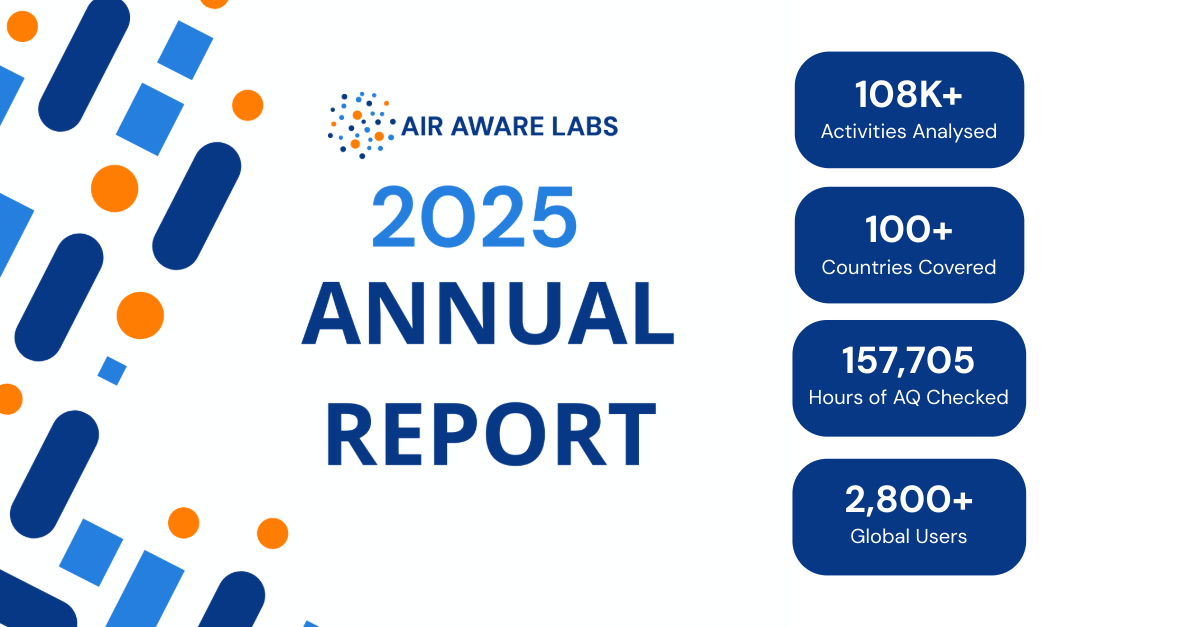
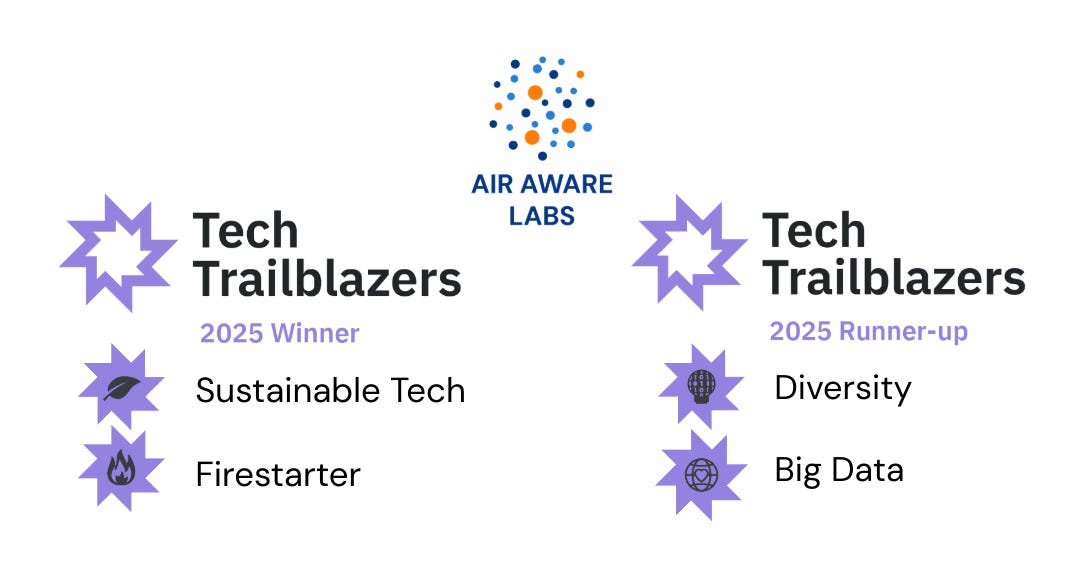
Thank you to everyone who voted for Air Aware Labs for the Tech Trailblazer award! We have been named winner in the Firestarter and Sustainable Tech categories and runners up in Diversity and Big Data! And all this on the day we launched our Annual Report. What a week!
Anyway, back to the point of the blog - business! This topic is partly inspired by a new campaign we have been running out of Air Aware Labs along with Global Action Plan (GAP) and Responsible 100. While GAP is known for its campaigning work around Clean Air Day and Night, Responsible 100 is a platform for corporate social responsibility. We have worked together to create a new framework for companies to assess their contribution to solving the problems of air pollution. We believe it’s one of the first, if not the only, dedicated air quality framework of its type.


This is crucial as industry, transport and agriculture account for over 80% of nitrogen oxide pollution, over 75% of non-methane volatile organic compounds and around 55% of fine particulate matter in the UK. Plenty of opportunities too - Clean Air Fund (CAF) estimates that £1.6 billion could be added to GDP and 3m workdays gained in UK if we meet World Health Organisation guidelines.
Louise was able to join a GAP seminar on the business case for clean air recently, which featured speakers from CAF, ShareAction (whose work in this area we have covered before) and Bupa. A clear message was that there is a window of opportunity to shape policy in the UK and businesses are critical in this. This seminar came before the announcement of new targets in the government’s Environmental Improvement Plan. Meanwhile the Parliamentary process around Ella’s Law rumbles on; and Mums for Lungs are making a case in Parliament for a public inquiry. As yet we are not seeing a concerted effort on the part of the business community in the UK, but we live in hope.
Jo’burg goes global
Global policy debates shape the national level too. The most significant recently was the G20 declaration coming out of the South Africa summit about the importance of air pollution. This might not seem significant, but with a multitude of issues vying for attention, this is the highest profile given to air pollution for a number of years. However, the impact of the G20 may be questionable, with a significant members not attending. The climate change COP30 last month was also a distinctly mixed bag on air pollution. Recently the UN General Assembly formally recognised air pollution as a major risk factor for non-communicable diseases but didn’t recommit to the WHO targets.
So in the absence of strong intergovernmental leadership, is the responsibility for tackling air pollution now shifting to businesses? Many argue this is true in the climate change landscape. But in the world of air pollution, discussion very quickly reverts to government, whether local, national or international. We ask ourselves, is it right to shift that responsibility to business and if so, how to make it stick? We hope Air Aware Labs can be part of this creating this more positive landscape!