


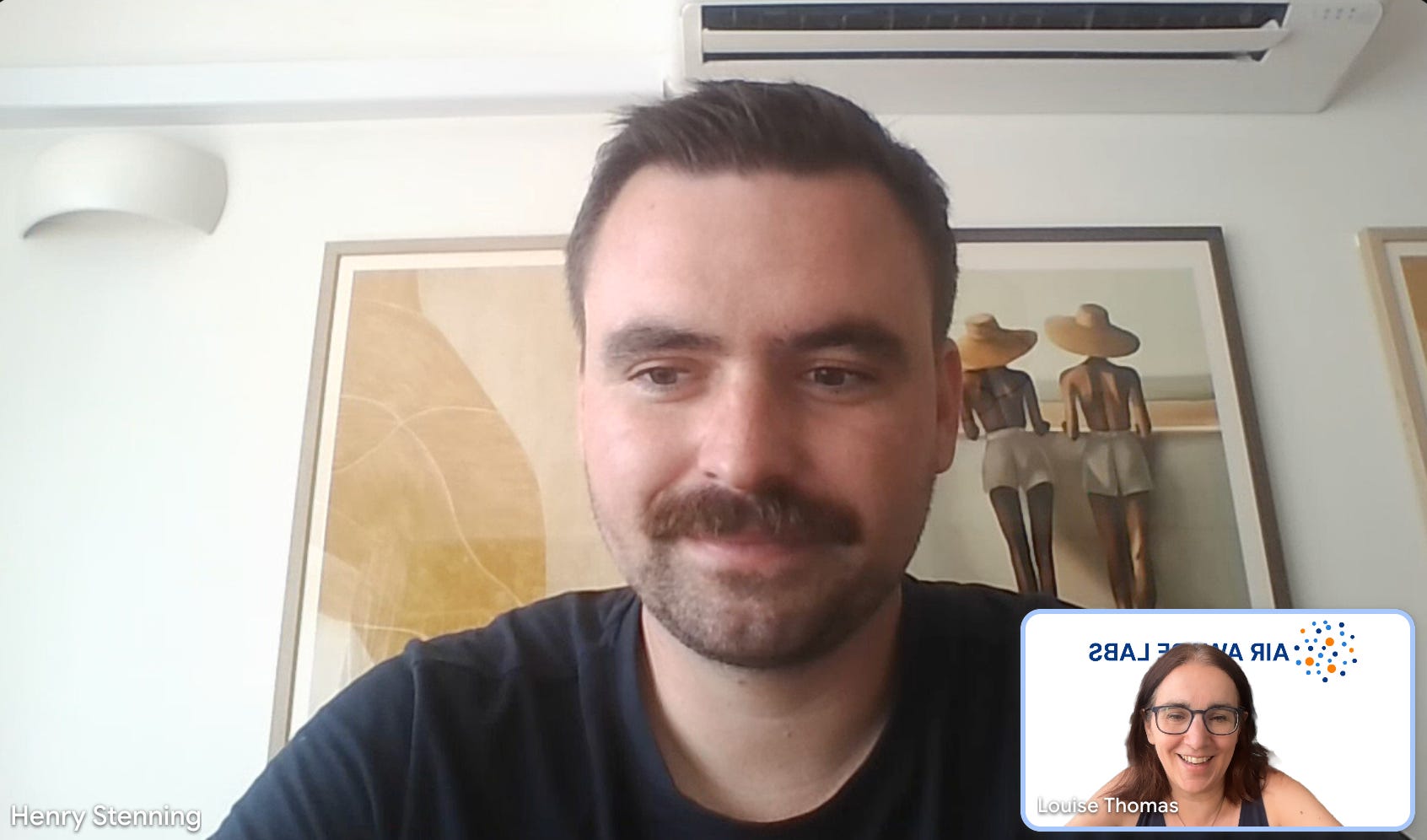
A special edition this week, with a very South London flavour! Louise has interviewed Henry Stenning, the Climate Resilience Officer at the Horniman Museum, after meeting its CEO Gordon Seabright at the Deputy Mayor’s roundtable on air quality (more on that later).
For those not local, the Horniman Museum is a family favourite for South Londoners and those from further afield. Famed for its overstuffed walrus (which has become the emblem of Forest Hill), amazing views over London and varied buildings set in beautiful grounds, it has been the location of many fun outings for our family.


So in preparation for the interview, and as an end of school term treat, Louise and daughter went for an outing and an investigation into the museum’s work on air quality. Not far from a recent outing to an art exhibition about Ella Adoo-Kissi-Debrah’s life, our daughter is now used to the combination of sweet treats and hunting for air pollution stories!
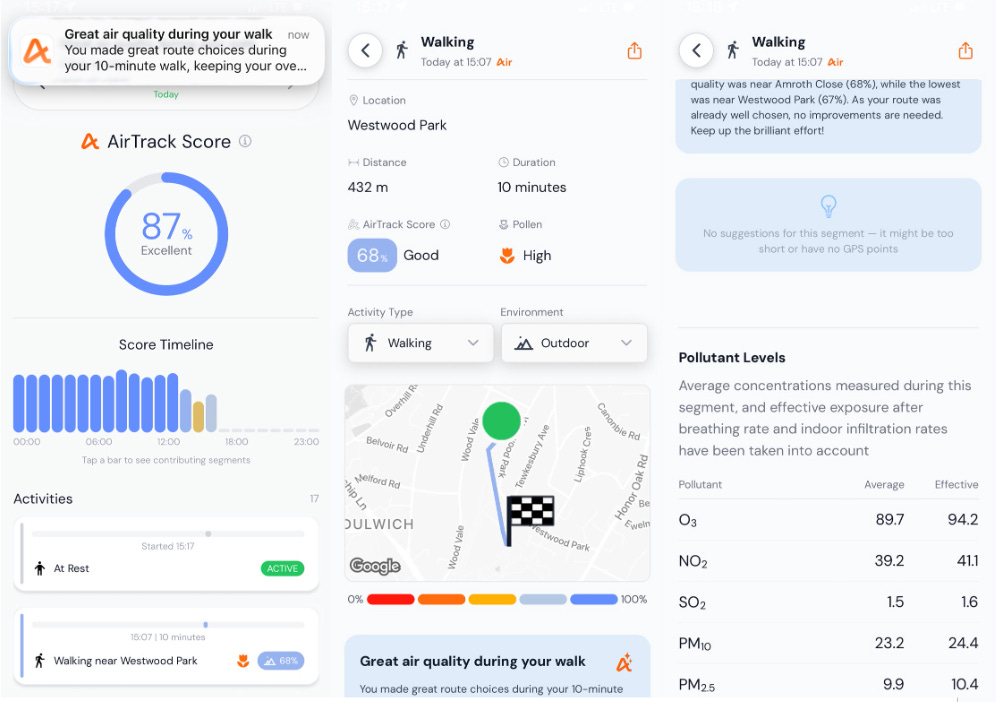
We were aware that there were some issues with the air quality monitor that had been installed so of course we took the opportunity to track pollution levels on AirTrack. Below is our walk from the bottom of the grounds up to the centre/high point, showing some fairly high pollution levels, but the AirTrack score being buoyed by the route choice away from main roads.
Anyway, enough of the preamble! Louise’s interview with Henry was really interesting and covered many aspects of air quality from public engagement to monitoring, and reducing emissions to the link with biodiversity. Some key insights:
their work stemmed from the death of Ella Adoo-Kissi-Debrah, who died in 2013 and was the first and only person to have air pollution listed on her death certificate; like Ella’s route to school, the Horniman is also located on the South Circular road, with pollution levels showing as elevated or even very elevated at times
a focus on air pollution is key to everything they do on sustainability, but sometimes funding can be restrictive and not extend to improving air quality - which Henry saw as a missed opportunity to hit multiple objectives at once
they’ve used the Air Pollution Footprint tool to identify, quantify and prioritise work on air quality, which gives a rounded picture including building and vehicle emissions on site as well as travel to and from the location
their main achievement to date has been the planting of Miyawaki method barrier, which is a fast growing and dense border, separating the grounds from the main road, with the aim of reducing particulate matter pollution - see Louise pictured in front of it in the picture above; the efficacy has yet to be proven and there is the challenge of including evergreen plants which might continue any air quality gains into winter
And…
the new cafe and playground at the bottom of the grounds had various sustainability elements as part of the plan, but what was notable was the consideration of location being as far away as possible from main roads - this stands out as great holistic thinking about how the environment impacts on the people using the site (not just the typical energy and materials considerations)
future aims include decarbonising the Butterfly House (for both carbon reduction and air pollution objectives) and ideally bringing back the living roof for the library building, though the latter would require considerable funding
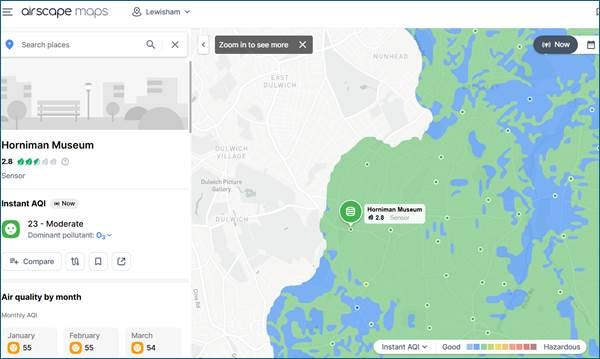
their air quality monitoring story has been challenging and reminded Louise a bit of our own story from hand-held monitors outside the school gates to fixed location Breathe London monitors: unfortunately their council-provided monitor located near the main entrance only delivered data for a few months before going offline (see below) and their aim to have monitors on either side of the green barrier is still a work in progress; while single time readings of nitrous oxides on either side of the barrier can only tell as small part of the story
in conclusion, Henry thought they could go much further in their air quality work, but Louise was impressed by the range of projects and potential for a museum such as the Horniman to be a real thought leader and awareness raiser.
As mentioned, the opening to investigate what the Horniman have been doing came initially from Louise’s invitation to a roundtable on air quality hosted at City Hall by Deputy Mayors, Mete Coban and Debbie Weekes-Bernard. What was special about this roundtable was the attendance from far beyond the air quality community, including Sport London as well as the Horniman museum. We’ll only achieve our aims by engaging health professionals, sportspeople, artists and many more!