

Pump it up!
Blowing hot and cold

Before we start, a warm welcome to our 200th subscriber!
Our regular readers will know too well that a significant amount of air pollution is caused by burning stuff, and in a lot of cases this stuff is fossil fuel. We often write about how reducing vehicle use can help to reduce air pollution but we must also consider the burning of fuel for heating. A study last year found that gas central heating boilers are now the top contributor to nitrogen oxides in central London, now that the ULEZ has helped to reduce vehicle emissions.
So, how should we go about addressing this next highest contributor? If you have a gas central heating boiler, as many in the UK have, there are a few options: air, ground or water source heat pumps, electric storage heaters and combi boilers, and solar water heating. Probably the most practical for many people is an air source heat pump (ASHP).
Less ASH more Pump
When we first heard a description of them, our reaction was slightly incredulous: “They just harvest heat from the air, and pump it into your house”. Whaaat?? It sounds like a difficult concept to get your head around, but it’s not unlike a refrigerator: if you put your hand near the back of a fridge, it’s warm: the heat has been pumped from inside the fridge to the outside. An air conditioner works in the same way: it takes heat from inside and pumps it outside.
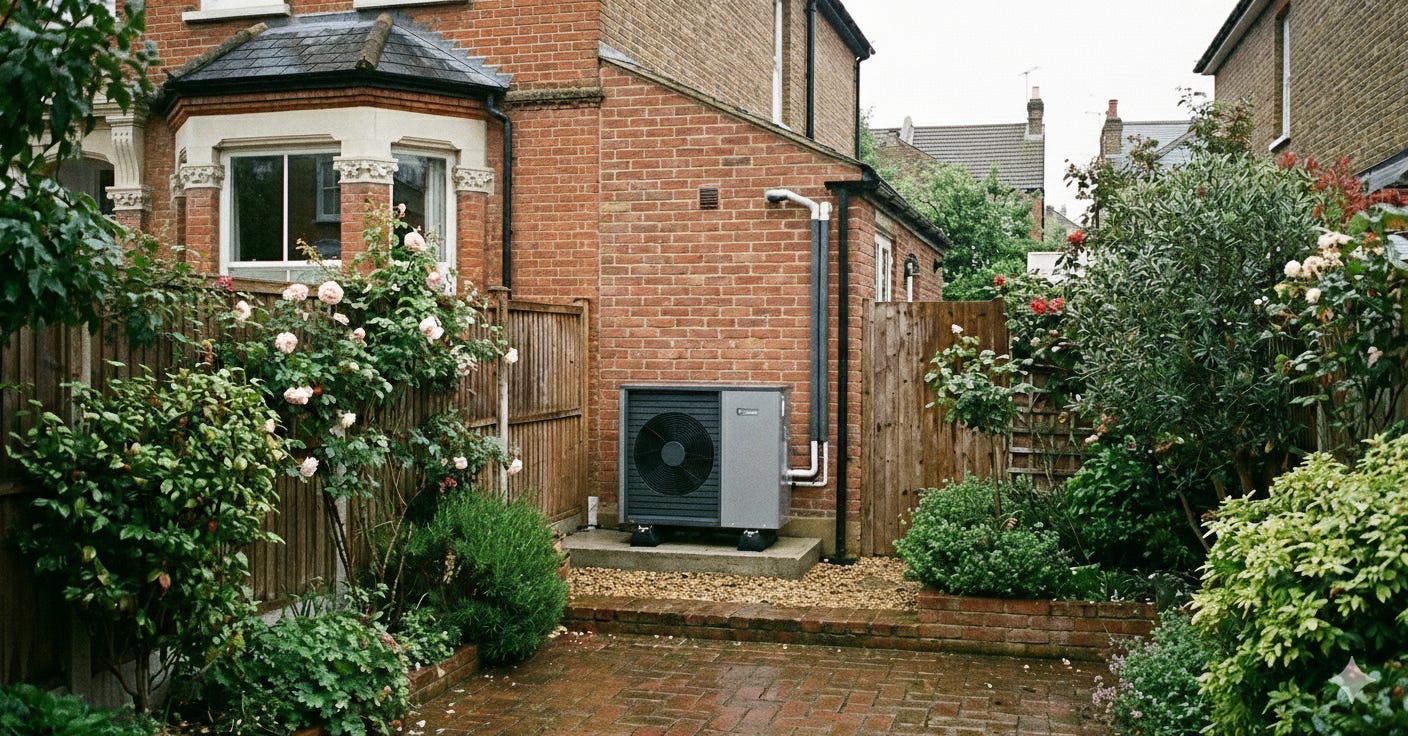
An ASHP is just the same only in reverse. Air-to-water heat pumps are the most common in the UK (heat from air heats up water), but air-to-air heat pumps are also available (they are less common because until recently government grants haven’t applied to air-to-air heat pumps). These blow hot air into rooms and have the benefit of being able to be reversed, turning them into air conditioners when it is hot. They need electricity to operate, but for every unit of electricity you put in, they typically generate four units of heat in return, massively outperforming electric-only heating such as storage heaters or electric combi boilers.
We have just started our investigations into a heat pump for our Victorian home and will bring you more news as the project progresses!
Burning issues
From heat pumps to a roundup of policy updates... As we recently reported, domestic wood burning makes a significant contribution to air pollution: emissions from domestic burning have risen in recent years as stove use has grown in popularity. To consider this, DEFRA has launched a public consultation on solid fuel burning which closes 19 March 2026 and we urge you to respond.
The Office for Environmental Protection has recently released a report into how the government is delivering against it’s Environment Improvement Plan. It’s a long report, but the air quality section starts on page 56 with this summary, and overall progress being “partially on track”:
Overall progress was mixed over the annual reporting period, an improvement on 2023/2024, with promising actions implemented across multiple key sectors, particularly road transport. However, delayed action and key regulatory gaps persist at local and national level, such as for the control of agricultural ammonia emissions.
And related, a new Parliamentary inquiry will explore the impacts air pollution has on health across different communities in England, and on the environment, such as through reduced crops, acid rain or biodiversity loss. We congratulate Mums for Lungs for landing this with the Parliamentary Committee. Meanwhile the Court of Appeal has been getting in on the action, ruling the decision by Tower Hamlets to remove Low Traffic Networks as unlawful.
It does seem like the many elements of the state are finally getting stuck into the huge issues that exist around air pollution. We won’t stop till we see significant impacts as a result!